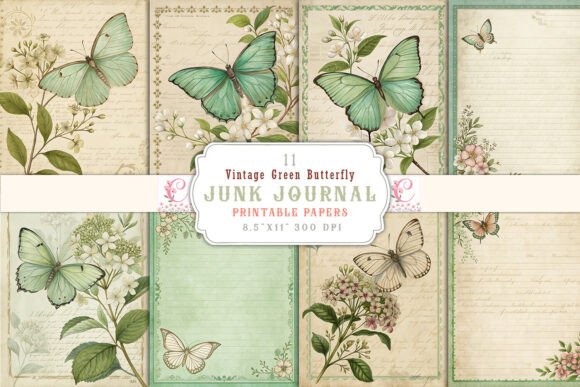
Embrace Nature's Charm with a Vintage Green Butterfly Junk Journal
In the world of digital art and handmade crafts, the search for textures that tell a story is constant. We often look for elements that feel tactile, organic, and steeped in history, even if they were created just moments ago on a screen. This is where the aesthetic of a Vintage Green Butterfly Junk Journal truly shines. It is not merely a collection of images; it is a curated set of design assets designed to bridge the gap between digital precision and the imperfect beauty of the physical world.
For designers, crafters, and entrepreneurs, the challenge lies in finding backgrounds that do more than just fill space. You need layers that add depth. The "Vintage Green Butterfly" theme offers a specific visual personality: it is calming, nostalgic, and inherently connected to nature. The color palette usually revolves around sage, olive, and moss greens, paired with the intricate geometry of butterfly wings. This combination creates a sense of organic elegance. It feels like opening a forgotten journal from the Victorian era, where botany and art were intertwined. The visual characteristics rely heavily on texture—think aged paper, subtle stains, and soft, faded ink. This style provides a backdrop that is rich without being overwhelming, allowing text and focal points to breathe while still maintaining a strong aesthetic presence.
Visual Identity and the Power of Green
Color psychology plays a vital role in design, and green is a powerhouse. It signals growth, renewal, and tranquility. However, "vintage green" is distinct from a bright, modern lime. It suggests patience and the passage of time. When you incorporate a Vintage Green Butterfly Junk Journal into your work, you are leveraging this psychological weight. In branding, this translates to a sense of trustworthiness and groundedness. It suggests that a brand is established, thoughtful, and connected to its roots.
Visually, the butterfly motif adds a layer of fragility and transformation. It softens the overall look of the design. When used in logo design or brand identity materials, these elements can help position a company as artisanal or boutique. It works exceptionally well for businesses that want to convey a "slow living" philosophy, such as organic skincare brands, independent bookshops, or sustainable fashion labels. The texture of the journal pages mimics the tactile quality of high-end stationery, which elevates the perceived value of the product or content it accompanies.
Practical Applications for Creatives and Professionals
The versatility of a Vintage Green Butterfly Junk Journal extends far beyond scrapbooking. While it is perfect for personal memory keeping, its utility in professional settings is significant. Here is how different professionals can leverage these assets:
- Editorial and Publishing Design: For book covers, especially in the romance, historical fiction, or fantasy genres, these textures provide an instant atmospheric backdrop. They can be used as chapter headers or page borders to create an immersive reading experience.
- Digital Marketing and Social Media: In a crowded feed, a textured background stands out against the flat, digital look of standard graphics. Use these pages as backgrounds for Instagram stories, quote cards, or Pinterest pins to add a touch of warmth and humanity to your digital presence.
- Packaging Design: For artisanal products like teas, candles, or handmade jewelry, incorporating these vintage elements into labels or tissue paper inserts can significantly enhance the unboxing experience. It communicates that care was taken in the presentation.
- Web Design: While large text blocks need clean backgrounds, these textures work beautifully for hero images, footer designs, or sidebar widgets. They add visual interest without the need for complex coding or heavy graphics that slow down load times.
Integrating the Aesthetic: Tips for Design Assets
When working with a Vintage Green Butterfly Junk Journal, the key to success is layering. These files are designed to be the foundation, but they often need to be combined with other elements to create a cohesive composition. Because the style is "junk journal," it embraces a collage aesthetic. You can layer ephemera—like stamps, handwriting, and old photographs—on top of these backgrounds to create complex, multi-dimensional art.
One practical tip for ensuring readability is to use opacity. If a background is too busy, lower the opacity of the texture layer or place a semi-transparent shape behind your text. This allows the beautiful vintage green tones to show through while ensuring your message remains clear. When pairing fonts with this style, look for typefaces that complement the organic nature of the design. A clean sans-serif font can create a modern contrast, while a handwritten or script font can enhance the romantic, vintage feel.
Evaluating Quality and Usability
When sourcing these assets, quality matters. High-resolution files (such as 300 DPI) are non-negotiable for print projects. If you are creating a physical planner insert or a printed art piece, pixelation can ruin the effect. The dimensions (8.5 x 11 inches) are standard, making them ideal for digital planners or standard printing.
It is also important to consider the format. ZIP folders are standard for bundling multiple files, but ensure you have the software to extract them. Once unzipped, JPG files offer universal compatibility across almost all design software, from Adobe Photoshop and Illustrator to Canva and Procreate. This accessibility makes the Vintage Green Butterfly Junk Journal a practical choice for designers at any skill level. Whether you are a professional publisher or a hobbyist making cards for friends, the workflow remains smooth and intuitive.
Final Thoughts on Creative Utility
Ultimately, a Vintage Green Butterfly Junk Journal is more than just a set of decorative papers. It is a toolkit for evoking emotion. It allows you to inject a sense of history, nature, and delicate beauty into your projects. By understanding the visual weight of the textures and the psychological impact of the color palette, you can use these assets to create work that resonates deeply with your audience. Whether for commercial branding or personal expression, these pages offer a timeless foundation for creativity.